When we began organizing this retreat, we faced a major challenge: bringing together an international team working remotely from Brazil, Sweden, Germany, and Spain for five days.
It wasn’t just a matter of finding lodging and booking a few activities. We needed to coordinate a place where the entire group could stay, a suitable space to work, and a program that would fit the rhythm of the stay.
The event took place during the first week of June in Agaete, in the north of Gran Canaria. The team stayed at El Cabo Coliving and used the coworking space associated with the accommodation to carry out their professional work.
This is a real-life example of how we collaborated with Repeople, a service provider catering to digital nomads, remote workers, and companies, to organize a corporate retreat in Gran Canaria for 55 participants.
The starting point: bringing together an international team
Although everyone worked for the same company, they carried out their day-to-day work from different countries.
In remote teams, much of the communication takes place via video calls, messages, and digital tools. During this retreat, the team members were able to meet in person and have a space from which to continue working.
The size of the group dictated much of the organization. Planning a “workation” for just a few colleagues requires a different approach than organizing an event of this scale.
It was necessary to ensure that the venues met the team’s professional needs and that the various parts of the program could unfold in a coordinated manner.
Agaete as the Base for the Experience
The team stayed at El Cabo Coliving and worked from the coworking space located in Agaete and affiliated with the accommodation.
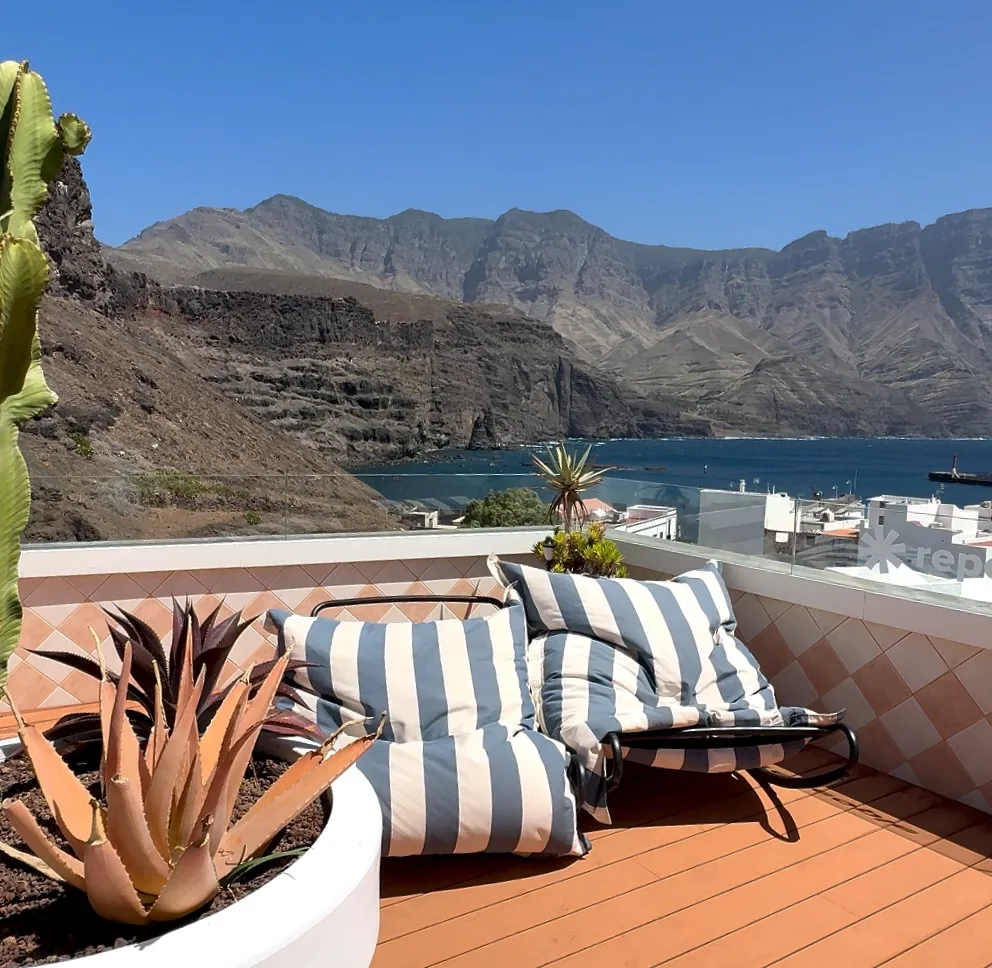
The choice of both locations was particularly important. The lodging had to meet the group’s needs, while the coworking space had to provide the necessary conditions for meetings and presentations.
Agaete thus became the base for the experience. From there, participants could get to know one another outside of their professional activities, exchange ideas and align on business projects, and take part in the activities included in the program.
For us, the workspace is not a secondary element in a workation or retreat. A destination may be very attractive, but it must also allow people to go about their day comfortably.
Internet connectivity, the work environment, and the ability to hold meetings must be considered from the outset. In this way, the change of scenery can be integrated into the experience without hindering the team’s objectives.
A Program Beyond Coworking
The retreat also included four activities:
A tour with a tasting at a farm.
A paddle tennis activity.
A paella cooking demonstration.
A party at a local estate.
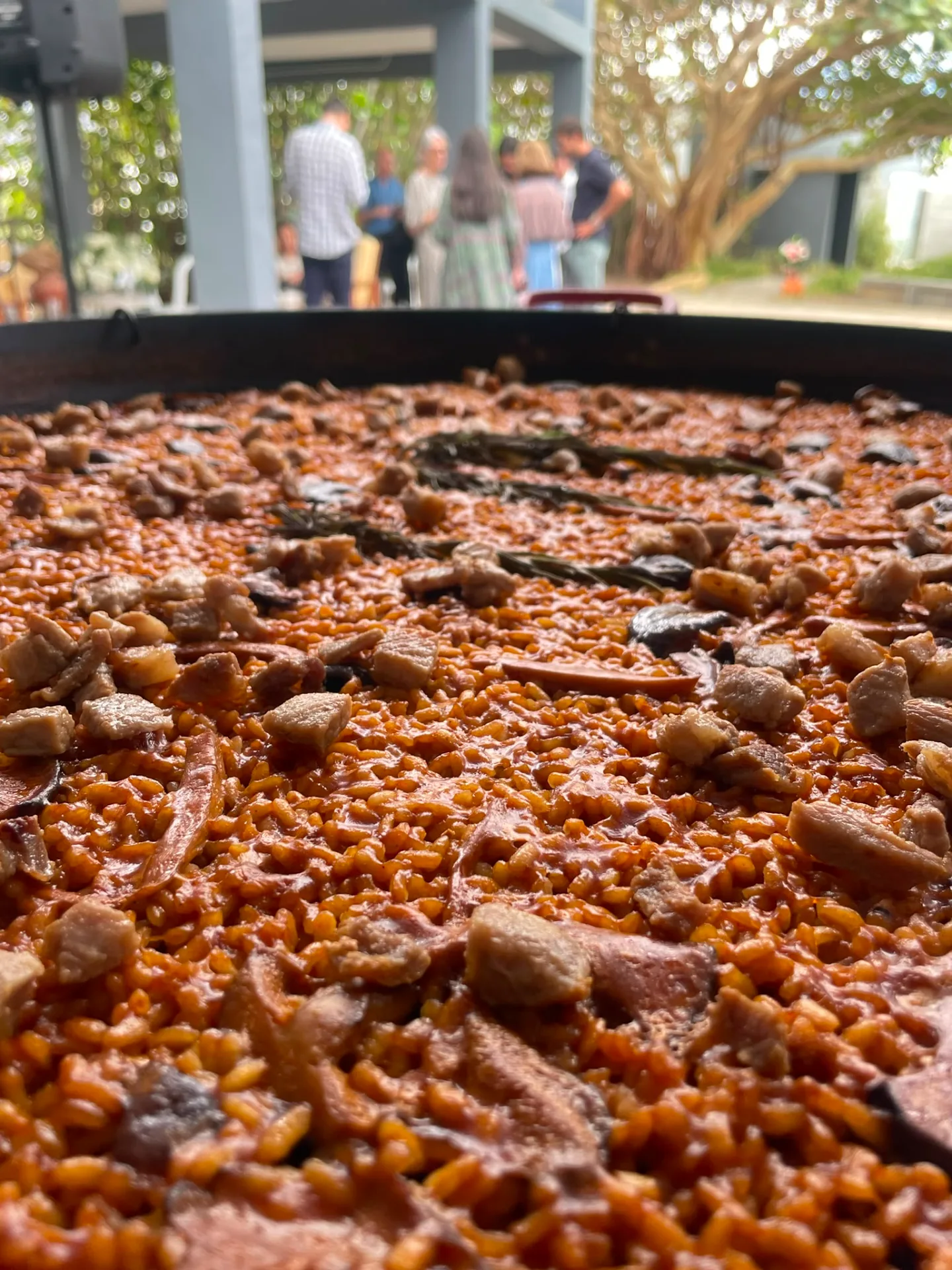
The tour with tasting introduced the group to one of the local attractions. The paddle tennis session provided a sporting activity, while the paella cooking demonstration and the party offered opportunities to socialize outside of a professional context.
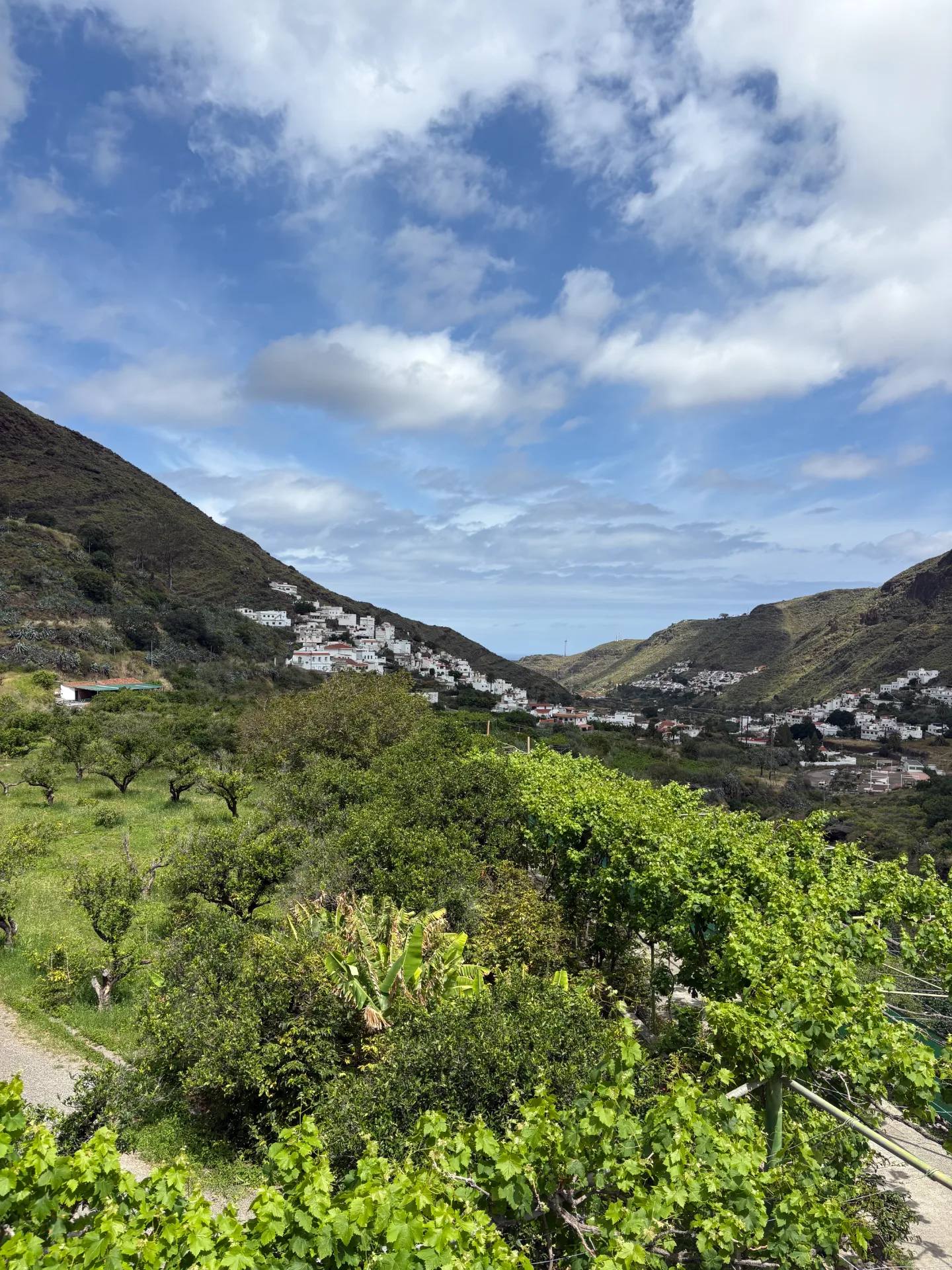
The program thus combined work, gastronomy, sports, and experiences tied to the destination.
Not all companies need the same type of itinerary. Activities should make sense within the duration of the stay and the characteristics of the group, rather than being added solely to fill the schedule.
What Can Happen Outside a Video Call
During a typical day of remote work, conversations usually have a specific purpose. A meeting is called, a project is reviewed, or a task is completed. When it’s over, everyone returns to their own space.
When people meet in person for several days, moments also arise outside of those scheduled meetings: meals, commutes, activities, and informal conversations.
This isn’t meant to replace remote work, nor does it imply that all teams must be together constantly. It’s simply a one-time opportunity to spend time together in a different setting.
In this case, the group was able to meet face-to-face for the first time, discuss projects they’re developing together, and, at the same time, enjoy a shared stay in Gran Canaria.
The Coordination That Doesn’t Show Up in the Photos
When we see pictures from a retreat, we usually focus on the venues, the meals, or the activities. However, behind each of those scenes lies a great deal of coordination that isn’t always apparent.
The organization must be a seamless interplay: accommodations, transportation, coworking, meals, and the activities included in the program. This is because with such large groups, a good dose of improvisation is already necessary to handle unforeseen events and last-minute requests, so at the very least, the foundation of the organization must be as precise as possible.
Throughout the stay, we remained available and kept in touch with the company representative who had planned the trip with us. We were on hand during the most chaotic moments, such as arrival or the quick transitions between activities. That support was precisely one of the aspects highlighted in their subsequent evaluation.
This is one of the essential parts of the experience. Well-planned organization doesn’t depend solely on having all reservations confirmed. It also requires communication and follow-up as the program unfolds.
The message we received at the end
At the end of the retreat, the company representative who had been in charge of organizing the trip with us sent us this message:
“I just got home to Barcelona. I wanted to thank you for all your help over the past few days. We had a wonderful time, and I have to say that everything was perfectly organized. Thank you also for keeping us constantly updated on the group and for being so helpful and professional at all times. You, Christian, and the rest of the team did an exceptional job. I had no doubt it would be a success, but it exceeded my expectations. It was a truly wonderful experience. Thanks again for everything!”
Her words sum up the work done during those days: a specific example that shows how we work and that has brought us satisfaction and pride.
Why Every Retreat Needs a Customized Approach
No two groups are alike. The number of participants, the length of the stay, and the company’s way of working all directly influence the organization of the retreat.
Before designing a proposal, we need to know a few basic details:
How many people will participate.
How long they’ll stay on the island.
What spaces they need to work.
What activities they want to include.
What pace they’d like to maintain.
Based on that information, we can determine the accommodations, workspace, activities, and necessary coordination.
Personalizing an experience means understanding the team’s needs and building the proposal around them—not just adding an endless list of plans.
What we learn from the teams that come to Gran Canaria
This retreat also confirmed three aspects we take into account when planning new experiences:
All elements—accommodations, workspace, activities, and communication—must work together seamlessly, not as separate bookings.
Coordination doesn’t end when the group arrives: remaining available throughout their stay is also part of the job.
No agenda is one-size-fits-all: the group’s size and work style determine which activities make sense and which don’t.
Are you thinking about organizing a corporate retreat in Gran Canaria?
At Oceanworking, we design workations and retreats tailored to the unique characteristics of each group.
Before preparing a proposal, we seek to understand what the team is like, how long the stay will last, and what kind of experience they want to have.
If you’re considering organizing a corporate retreat in Gran Canaria, let us know how many people are in your group, how many days you’d like to stay on the island, and what your needs are.
Because there’s much more to a retreat than just accommodations and a list of activities. There’s a team, several days spent together, and an experience where every piece must fit into place.
We can help you design a proposal tailored to your group’s size, the length of your stay, and your work-related needs.